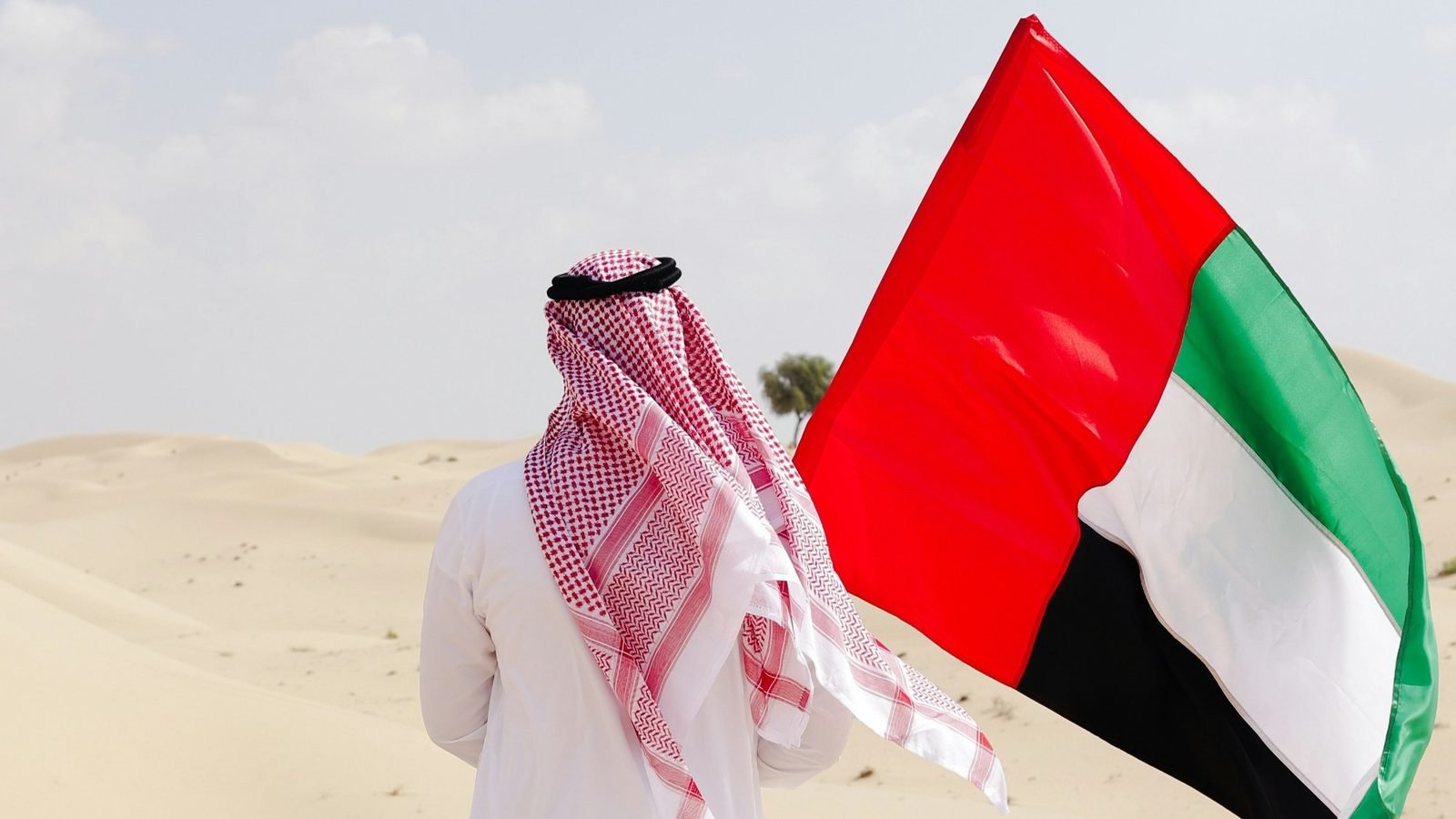
UAE — United Arab Emirates — is the universal standard in every international business, legal, and regulatory context. Local-language abbreviations (ZEA in Polish, VAE in German, ОАЭ in Russian) are correct within their own languages and completely invisible outside them. Using a local-language abbreviation in an English-language document, email, pitch, or conversation does not cause a catastrophic error — but it does send an immediate signal about whether you genuinely operate in this environment or are observing it from the outside. In a market where clients pay for expertise they cannot easily verify, that signal carries real weight.
| Context | Correct term | Why it matters |
|---|---|---|
| English-language email, contract, pitch | UAE | Universal standard; any other term is unrecognised |
| Polish-language communication | ZEA | Correct local abbreviation; use consistently within Polish text |
| German-language communication | VAE | Same principle — language determines the abbreviation |
| Bilingual document (PL/EN) | ZEA in Polish section, UAE in English section | Correct localisation, not inconsistency |
| Corporate registration documents in the UAE | UAE | Required by all free zone and federal authorities |
| Banking and KYC documentation | UAE | Standardised by all UAE banks and compliance frameworks |
| International investor materials | UAE | Anything unfamiliar introduces doubt about operational credibility |
What is the UAE and how is it structured?
UAE stands for United Arab Emirates — the official English name of the federal state comprising seven emirates: Abu Dhabi, Dubai, Sharjah, Ajman, Umm Al Quwain, Ras Al Khaimah, and Fujairah.
This is the name used by the federal government, the Central Bank, and the Federal Tax Authority that issues Tax Residency Certificates. Every free zone authority, every corporate services provider, every bank compliance officer, and every international law firm operating in the region uses UAE. The UN, the IMF, the World Bank, and every bilateral trade agreement the country has signed use UAE.
When you operate in this environment — or position yourself as someone who understands it — UAE is not one option among several. It is the only option.
Why do some people use the wrong term?
Entrepreneurs from countries with a tradition of translating foreign proper nouns into the local language will be used to calling this country something different. Polish speakers say Zjednoczone Emiraty Arabskie — ZEA. Germans say Vereinigte Arabische Emirate — VAE. Each is correct within its own linguistic context. Each is invisible outside of it.
The problem arises when someone crosses from their native-language context into an international one — and carries their local abbreviation with them. Someone who has spent months consuming Polish-language content about relocating to Dubai will have ZEA as their default. When they write their first English email to a Dubai bank, or prepare an English-language pitch deck, or speak to an Emirati business partner, that abbreviation follows them out of context.
A bank compliance officer has never encountered ZEA. An Emirati partner will not recognise it. An international investor will pause — not because the content is wrong, but because something feels slightly off. And in business, slightly off is enough to cost credibility before the conversation has started.
Is Dubai the same as the UAE?
No — and this distinction also matters.
| Term | What it refers to |
|---|---|
| UAE | The federal state — all seven emirates, federal government, federal institutions |
| Dubai | One emirate within the UAE federation — the most populous and internationally recognised |
| Abu Dhabi | The capital of the UAE — where the federal government and Federal Tax Authority are headquartered |
| Ras Al Khaimah, Sharjah | Other emirates with distinct free zones, licences, and regulatory frameworks |
"Setting up in Dubai" is geographically specific and widely understood. "Setting up in the UAE" is legally and federally precise. Both are correct and useful in different contexts. "Setting up in ZEA" in an English-language context is understood by no one outside of a Polish-speaking audience.
When you apply for a Tax Residency Certificate — the document confirming UAE tax residency — you deal with a federal authority based in Abu Dhabi, not a Dubai entity. When you choose a free zone, RAKEZ in Ras Al Khaimah and IFZA differ from DMCC in Dubai in ways that matter for licensing, banking, and cost. The federal structure is not a technicality — it is operationally relevant.
Why does terminology signal expertise in a premium advisory context?
In most industries, the details of how you communicate matter less than what you communicate. In the advisory, relocation, and wealth structuring space — details are everything.
Your clients pay for expertise they cannot easily verify themselves. They cannot independently assess whether your understanding of UAE free zone law is accurate. What they can assess, immediately and intuitively, is whether you sound like someone who actually operates in this environment.
| Signal | What it communicates |
|---|---|
| Seamlessly uses UAE in English, ZEA in Polish | Moves between worlds fluently; operational familiarity |
| Uses ZEA in English-language documents | Learned about Dubai; has not yet operated there professionally |
| Uses "Dubai" and "UAE" correctly in the right contexts | Understands the federal structure, not just the city brand |
| Inconsistent usage within a single document | Reduces confidence in the overall credibility of the document |
This is not pedantry. In a market where clients entrust decisions affecting millions in assets, every signal of competence or its absence is amplified. Clients who can choose their advisors carefully will choose the one who sounds like they belong in the world they are navigating.
A rule that covers every situation
There is no complexity once you internalise the logic:
The language of the communication determines the terminology you use.
- Writing or speaking in Polish → ZEA
- Writing or speaking in English (or any other language) → UAE
No exceptions, no grey areas. Never mix them within a single document. Never assume a non-Polish reader will decode ZEA from context. If you produce bilingual documents — a Polish-English corporate resolution, a dual-language shareholder agreement — use ZEA in the Polish section and UAE in the English section. This is correct localisation, not inconsistency.
In short: Use UAE in every English-language document, email, pitch, contract, and conversation. ZEA is a correct Polish abbreviation — correct in Polish, invisible everywhere else. It is a three-letter habit that takes thirty seconds to build and quietly reinforces your credibility every time someone reads your work. In the business of international relocation and wealth advisory, those signals accumulate.
Frequently Asked Questions
Does using ZEA instead of UAE cause any legal or administrative problems? No — it is not a legal error in any document. The consequence is a credibility signal, not a compliance failure. However, in KYC documentation, corporate structure charts, and banking forms, using non-standard terminology can create unnecessary questions from compliance officers who are not familiar with the Polish abbreviation.
Is Abu Dhabi or Dubai the more important emirate for an entrepreneur setting up a UAE structure? They serve different functions. Dubai is the dominant hub for international business, finance, and commerce — most free zones used by foreign entrepreneurs are in Dubai (DMCC, DIFC) or closely associated with Dubai's ecosystem. Abu Dhabi is the federal capital and the seat of federal institutions, including the FTA that issues tax residency certificates and the ADGM, which is a significant financial centre in its own right. The two cities are not in competition from an entrepreneur's perspective — they serve different parts of the structure.
Which free zones are not in Dubai? ADGM (Abu Dhabi Global Market), Sharjah free zones (SHAMS, SAIF), RAKEZ (Ras Al Khaimah Economic Zone), and Ajman Free Zone, among others. RAKEZ in particular has attracted growing interest as a cost-effective alternative to Dubai free zones, especially after the 2023 corporate tax reform changed the landscape for free zone companies.
Should I say "Dubai" or "UAE" when describing my company's jurisdiction? "Dubai" when referring to the city and emirate specifically (e.g., "our office is in Dubai," "we are registered in the DMCC free zone in Dubai"). "UAE" when referring to the federal jurisdiction (e.g., "our company is incorporated in the UAE," "we operate under UAE law"). Both are correct and useful — the choice depends on what is being described.
Does it matter whether I use "Emirates" or "UAE" in English? "The Emirates" is informal shorthand, widely understood and acceptable in casual conversation. "UAE" is the formal standard for documents, legal filings, and professional communications. "United Arab Emirates" is used in full when precision is required — in contracts, in formal correspondence, and in regulatory documents.
This article is for informational purposes only and does not constitute legal, tax, or financial advice.